Jean Baptiste Camille Corot
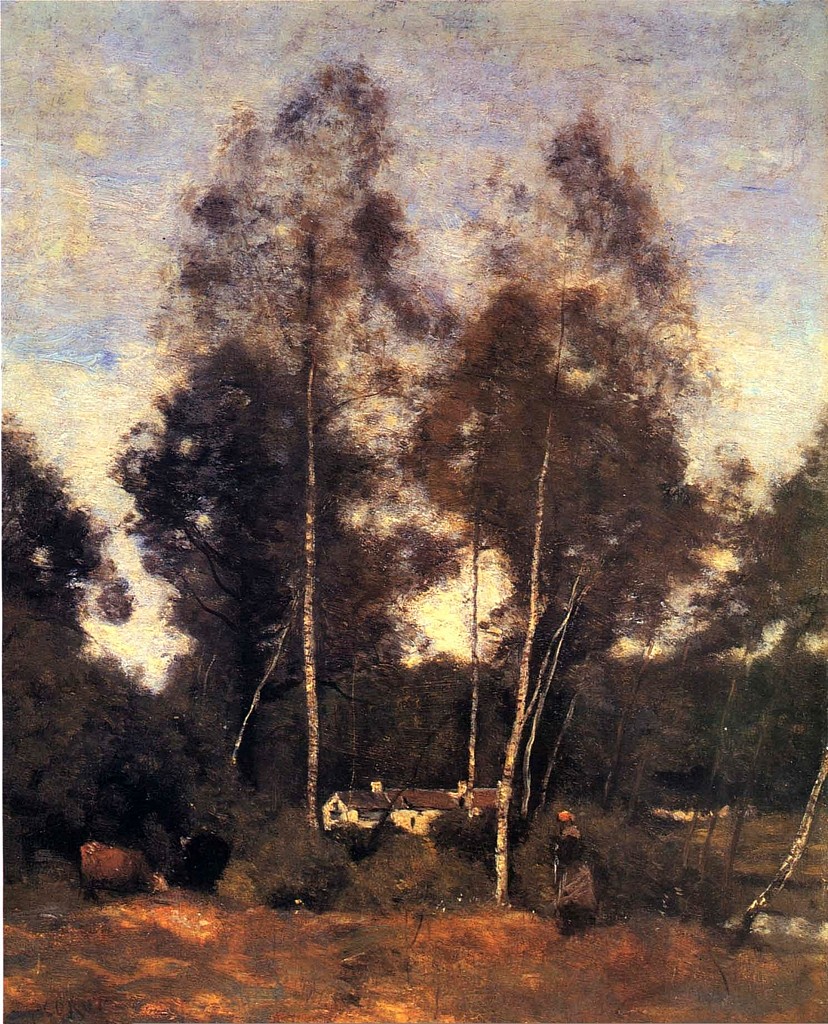


Jean Baptiste Camille Corot, Clairiere du Bois Pierre, aux Evaux, Près Chateau-Thierry111, 1855-65
Oil on canvas, 16 x 12 5/8 x 1/2 in. EDIT
COR-003-PA



Jean Baptiste Camille Corot, Coubron - Route Montante, ca.1870
Oil on canvas, 10 x 14 in.
COR-007-PA
L' Hippocampe: https://jeanpainleve.org/node/48

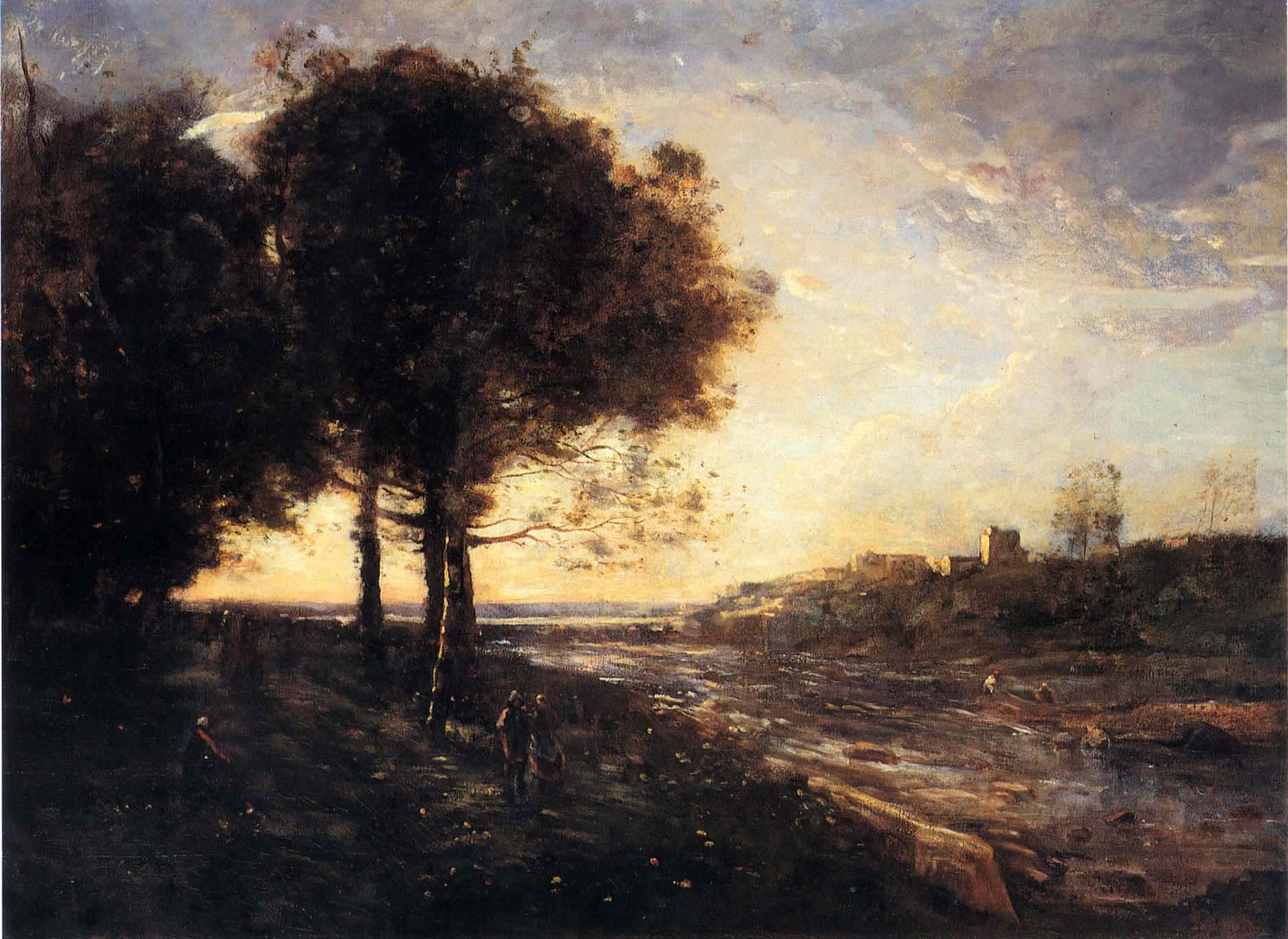





Jean Baptiste Camille Corot, Argues-Ruines du Chateau, 1828-30
Oil on canvas, 888 1/4 x 12 1/4 x 3/4 in.
unique work. This piece makes me think of Nancy Spero and a propaganda poster. Love the colors and strength. I didn't realize what the work was about. Read on. Jessica writes me: "This work visualizes relationships I witness as a Domestic Violence advocate. Each of the pieces in the show was about a different kind of relationship and its growth and eventual deterioration in the cycle of violence that is intimate partner violence. The piece you have depicts an elderly relationship. One where the people that loved each other have been together forever, where they help each other to survive, but one where one part of that relationship is declining and in that decline has begun to become violent and uncontrollable. This is common for elderly couples, unfortunately, where via poor health, or loss of sanity, or inability to care for oneself, or any number of reasons, one party will begin to lash out at the other and the once long lasting relationship falls apart. It is a hard situation and like all intimate partner violence, it is still a hard situation to leave because there is history and there is hope. History of 20 some odd years of marriage. Hope that medication or time will heal the party that has become violent." Christina Cotter writes: "Caldas is an advocate at the Atlanta Volunteer Lawyers Foundation, which develops and coordinates programs that provide legal representation, education and advocacy for at-risk, low-income individuals in need of counsel. It is clear from this exhibit that she has been deeply affected by her work, and perhaps feels the need to give voice to some of the narratives of domestic violence to which she has become privy. But beyond the social issues, Caldas' images exhibit a deftness of composition, color and line and a mastery of her craft. She fearlessly portrays the inherent psychology of the cycles of abuse, showing images of women and children (and sometimes pets), often overlaid with the texts of abusive threats, to drive her emotional point home. Through them we are invited to take a harsh look at the reality of domestic violence and contemplate its toll on both the victims and society at large. In both her style and subject matter, Caldas is a successor to the German Expressionist printmaker Käthe Kollwitz, who was concerned with the effects of war, hunger and poverty on the less fortunate, especially women and children. Initially, the warm, muted colors of Caldas' relief-style prints are welcoming: all orangey browns, reds and ochers on lunch-sack tans (interestingly, there is no black and white here). But further investigation of the details reveals startling and haunting narratives. Caldas' work asks us to consider our own highly personal yet socioeconomically based opinions on the subject of domestic violence - a strong pill to swallow, but she does so through the beauty of her imagery. These prints are windows onto the human condition, portrayed with vigor, truth and empathy." "Just as any love story does, the stories of violent relationships each develop differently. Though a relationship full of love should not be violent there is indeed love. There is a very human hope and belief in love. There are lines of power, control and anger that should not be crossed but they are crossed. Violence should not be hard to see, hard to distinguish, hard to name and yet it is. When we see violence from an outsider's perspective and we want to understand it we place ourselves, or those we know, in the moment and we ask "What if it was me?" Why do we have to ask this question? When we don't want to understand violence we push the stories away from us, and we say "that could never happen to me". In this moment we are failing to understand that, like love, violence is all around us. their development through the cycle of violence, the perspectives surrounding the relationships, and the questions of what happens when love is pressured by violence and control." I also wanted to tell you a little about the piece you bought: Steve, I hope this information is valuable to you. Please let me know if you need anything else. By CHRISTINA COTTER "We hear the statistics; we see the stories on the news almost daily; and still we have yet to come to grips with the enormous problem of domestic violence in our country. Perhaps the repetition of the statistics has numbed us, because it is still somewhat rare for an artist to choose this subject as his or her focus, even though art is a compelling prism through which to express and contemplate the nuances of this systemic social problem. Atlanta artist Jessica Caldas has taken up this mantle with impressive results. "Falling In . . . ," Caldas' solo exhibition of prints at Beep Beep Gallery through May 4, artfully documents the complex nature of relationships tainted by abuse. . In "Barriers to Consent," for example, an image of two women (a mother and daughter?) with three small children is overlaid and repeated in a collage of prints. In the forefront of the work, the faces of the women and children have been aggressively scratched away, simple mark-making that carries the most ominous of portents. On top of this layer, a police car and (cuffed?) hands have been added in blood-red ink beside a lone image of a naked young woman's torso. While some of the imagery may be exceeding literal, it certainly hits its mark. In the hands of a lesser artist, the morally tinged subject matter might have fallen into the trap of preachy homilies. Caldas' subtlety and finesse provide more intriguing narrative layers, revealing the complexities of domestic relationships and the push-pull of control and abuse. This is evident in "Anything for the Children," in which the artist focuses on a lone child in a twin image, with one faceless version predominating. In the background, a small image of a smiling nuclear family at the dinner table represents a direct contrast to the print's meaning. Above them hangs the sloppily scrawled threat "If you keep me from my kids, it won't be good," and drawn across the child's body is a red rope and two hands pulling back and forth in an effort to gain control: a literal tug of war. Caldas utilizes the inherent tension of the image to create an unsettling dynamic After the Honeymoon" offers the grim reality of a marriage gone bad. Once again the faces are blanked out; here they are of a husband and wife in wedding attire repeatedly superimposed over an image of a tiny, idyllic home and the text of legal documents identifying a petitioner and respondent and the details of their court case. On top of this, a large, red, accusatory pointing finger looms from the left side of the frame, while the threatening text "This is what happens when you don't come home" hangs on the right. Clearly, the faceless figures represent the anonymity of the narrative's subject but also convey the universality of the themes. The repetition of images in many of these prints creates resonates, just as abuse resonates throughout the victim's life and also extends through the family and beyond, into society.
COR-005-PA
Gallery Location: Dane's Art Emporium and Traffic School
|
Provenance:
|
|
Exhibitions:
|
|
Financials:
|
|
Purchased From:
Purchase Date:
Purchase Price:
Retail Price:
|
Out Auction
6/8/2002
$ 600.00
$ 600.00
|
|
VALUE HISTORY
|
Date
|
Amount
|
|
|
Appraisal Value
|
1/31/2003
|
600.00
|
|
|
Appraisal Value
|
5/17/2005
|
0.00
|





Jean Baptiste Camille Corot, Les Chevaux de Wouvermans 1111, 1872-74
Oil on canvas, 10 1/4 x 13 3/8 in.
COR-004-PA


Jean Baptiste Camille Corot, Les Chevaux de Wouvermans, 1872
Oil on canvas, 10 1/4 x 13 3/8 in.
COR-00002
Location: Anderson and Frances Williams, John, Malibu
Source: Smith III and Alice Adams, John



Jean Baptiste Camille Corot, Les Prés de la Petite Ferme, 1860-700
Oil on canvas, 12 3/8 x 18 1/16 in.
COR-00001
Location: Hydro-Electric Projects
Source: Smith III and Alice Adams, John